Le disjoncteur est un appareil qui protège l’installation électrique d’un foyer/lieu ainsi que les occupants, il assure l’arrêt d’urgence de l’ensemble de l’installation électrique en cas de problème, de surtension, etc. Cet appareil est réglé selon l’abonnement électrique choisi par l’usager : en règle générale, si l’appareil détecte une trop grande puissance supérieure à celle qui est souscrite, le disjoncteur coupe automatiquement le courant. Chaque appareil disjoncteur est certifié NF-USE.
Types de disjoncteurs
Il existe plusieurs types de disjoncteurs, à savoir le disjoncteur magnétothermique qui associe une protection thermique contre les surcharges électriques et une protection contre les courts-circuits par boucles magnétiques. Ensuite, il y a les disjoncteurs magnétiques qui sont utilisés en cas de fortes surintensités, on les retrouve surtout pour protéger les moteurs, les transformateurs.
En troisième point, il y a les disjoncteurs électroniques qui vont régler le seuil de protection contre les surcharges et les courts-circuits, ils sont souvent équipés avec des écrans pour les réglages et paramétrages.. Enfin, il se trouve qu’il existe des disjoncteurs différentiels qui, eux, vont mesurer l’ensemble des courants de l’installation et vont déclencher l’ouverture d’un circuit s’il détecte une différence entre le courant aller et le courant retour. C’est assurément la meilleure protection des biens et des personnes contre l’électrocution. Ces disjoncteurs sont à haute sensibilité (30 mA) pour une meilleure protection, la sensibilité étant le seuil de déclenchement en cas de surcharge de courant.
Le disjoncteur divisionnaire
Un cinquième type de disjoncteur existe, c’est le disjoncteur divisionnaire qui assure la protection des biens et des circuits électriques de l’installation : en effet, dès qu’il détecte une surcharge, il coupe le courant de toute l’installation. On reconnaît ce type de disjoncteur divisionnaire grâce à sa petite manette qui s’abaisse permettant de mettre en cause le circuit concerné, il suffit ensuite de remonter la manette pour rétablir le courant.
Un interrupteur différentiel est un petit appareil qui va protéger va protéger les occupants et l’installation toute entière contre les éventuels aléas électriques en isolant le problème électrique, se caractérisant par la mise en contact impromptue et inopinée d’éléments en métal d’un appareil électrique. Un seuil de déclenchement est souvent préconisé avec un interrupteur différentiel, souvent de 30 mA. En résumé, ce dispositif va servir à isoler un circuit électrique lorsque le courant est différent entre les deux fils du circuit.
Rôle de l’interrupteur différentiel
En règle générale, le rôle de l’interrupteur différentiel est de détecter et de coupure tout courant électrique dans les appareils qui sont alors en défaut. Ce petit appareil permet en plus d’isoler manuellement tous les circuits branchés, ce qui en fait un dispositif dit de sectionnement en cas d’arrêt de courant d’urgence. C’est pourquoi il est souvent recommandé d’installer l’interrupteur différentiel entre le disjoncteur général et les disjoncteurs divisionnaires. Grâce à sa petite manette de commande, il est possible de mettre hors tension la partie du circuit concerné. L’interrupteur différentiel (ID) a les mêmes fonctions qu’un disjoncteur différentiels mais demeure moins performant que ce dernier car il va protéger les personnes contre les risques d’électrisation et d’électrocution mais ne va pas détecter le risques de surcharge ni même les courts-circuits. Il est à noter toutefois, à l’inverse des disjoncteurs, que l’interrupteur différentiel est équipé d’un bouton-test pour vérifier on bon fonctionnement.
Types d’interrupteurs différentiels
Il existe différents types d’interrupteurs différentiels, à savoir le type AC pour toutes les installations standard, le type A pour protéger les circuits spécialisés de lave-linge, cuisinières, plaques de cuisson et le type B qui est davantage préconisé pour des installations des courants continus comme pour une éolienne par exemple. Enfin, lanorme NFC 15-100 impose un nombre minimal d’interrupteurs différentiels en fonction d la surface de l’habitat.
This article explains automatic battery charger. Components, connection diagram and simulation in proteus of 12V battery charger is also explained in the article.
Batteries are very important in electrical and electronics world. Batteries need to recharged once their charge is finished. This article will introduce about one of the simplest 12V battery charger with automatic cutoff. Automatic battery charger is built with easily available electronic components which are cheap and can be easily find. The circuit is tested in Proteus ISIS for verification.
Typical Automatic battery charger arrangement
The minimum requirement for any battery charger is shown in the following figure
The voltage level of an AC source is brought down to a safe level by Transformer. The output of transformer is given to the rectifier. It converts AC into DC. The output of rectifier is unregulated so a voltage regulator is installed to get regulated voltage. Now regulated voltage can be given to the battery for charging however applying continuous voltage when battery is fully charged can damage the battery. For this purpose, auto cutoff arrangement is needed which should disconnect the battery from charger when charging is complete.
Components and circuit diagram for 12V battery charger.
Transformer (220/25V)
1N4007 Diodes
Capacitor 470uF
Voltage regulator LM317
Resistors
Zener Diode ZPD12RL
Transistor BD139
12V relay
220V, 50Hz AC supply
The above components are connected in the following way to make automatic battery charger.
Working of Automatic Battery Charger.
Normal AC supply in most of the countries is 220V 50Hz. This high voltage cannot be converted directly into DC as it can damage the electronic components. For this purpose 220V/25V transformer is used to bring voltage down. For 12V battery charger, the voltage on the secondary side should be in between 15V and 25V so that it can be adjusted around 12V via regulator. The bridge rectifier circuit is used to convert AC into DC. The output of rectifier is pulsating DC which must be smoothed before applying to regulator. Smoothing capacitor is connected at output of bridge rectifier. Pure DC is than given to the voltage regulator LM317. The output of LM317 can be adjusted as follows.
Vo = VREF (1 + R2 / R1)
In series with R2, a variable resistor RV4 is connected so that the output voltage of regulator can be adjusted. The reference voltage is the input voltage.
A small capacitor is connected at the output of voltage regulator whose purpose is to stabilize the output of regulator. Its value is given in the datasheet of Lm317.
A diode D5 is connected after the resistor at the output of regulator. The purpose of this diode is obvious. It only allows the current to flow from regulator towards battery but not backward. In this way it saves the battery from being discharged through the regulator.
Zener diode along with transistor, two resistors and 12V relay makes the automatic cutoff arrangement for 12V battery charger. Zener diode starts conducting due to zener breakdown when voltage increases form 13V. When its start conducting, current is supplied to the base of transistor and it moves from cutoff region to conduction state. As a result the collector of transistor which was previously at 12V (due to cutoff) now at ground level (or near to ground level). As a result the 12 volt relay will operate (to learn how 12 V relay works click). The resistor at the connected at the base of transistor controls the sensitivity of the cutoff switch. Low value of this resistance will operate the switch as soon as zener starts conducting while higher value will operate the switch when voltage goes beyond 13V by good range.
When relay operates, battery is isolated from the automatic battery charger.
Simulation
Automatic battery charger is simulated in ISIS Proteus and the result is shown int the following figure. Since the Proteus does not have any active model of Battery so simulation is done by keeping the battery terminals open. Initially the voltage is less 14.5V so the relay position is such that battery terminals are in the circuit for charging.
Now voltage is increased the relay has been operated as shown.
Now the battery terminal are isolated from charger to prevent overcharging.
Les transformateurs de puissance font partie des composants clés des réseaux électriques en courant alternatif. Ceux-ci sont en pratique triphasés. Les enroulements des transformateurs, qu'ils se trouvent dans une même cuve dans le cas d'un transformateur triphasé ou répartis dans 3 transformateurs monophasés, peuvent être connectées de différentes manières entre eux et aux trois phases du réseau. Ces différentes connexions sont appelées couplage1. Les trois couplages possibles sont celui en étoile, en triangle et en zigzag. Le couplage du transformateur représente la combinaison du couplage du côté primaire, du côté secondaire voire du côté tertiaire. Un couplage de transformateur est exprimé en commençant par celui du primaire. Si le primaire est en étoile et le secondaire en triangle, cela donne donc un couplage étoile-triangle. Les couplages se différencient vis-à-vis de la tension et au courant qu'ont à supporter les enroulements, à la présence ou non d'un point de neutre et à leur impédance homopolaire. Cette dernière peut être choisie élevée afin de limiter les courants de court-circuit asymétrique ou bas afin de limiter la surtension dans les phases saines lors de défauts asymétrique. Une solution pour réduire l'impédance homopolaire est l'ajout d'un troisième enroulement connecté en triangle qui de plus symétrise les courants de court-circuit.
En plus de la fonction classique d'un disjoncteur qui protège des surcharges, un disjoncteur différentiel interrompt l'alimentation en cas de fuite de courant dans une installation. Il possède donc un interrupteur différentiel, dont ne dispose pas un disjoncteur classique.
Principe du disjoncteur différentiel
Dans le cas d'un courant monophasé (celui d'une installation domestique), le disjoncteur différentiel compare (par un procédé électromagnétique) l'intensité du courant de phase et celle du neutre, en quelque sorte les courants entrant et sortant. Ils doivent être égaux. S'il existe une différence (en milliampères, ou mA), c'est que le circuit comporte une fuite vers la terre. Si la différence est supérieure à un seuil déterminé, le disjoncteur coupe le circuit.
Intérêt du disjoncteur différentiel
Les fuites de courant dans une installation peuvent être dangereuses et leur prévention est une mesure de sécurité. Le disjoncteur différentiel protège donc aussi les personnes. Il est considéré qu'une sensibilité de 30 mA (qui sera l'intensité maximale reçue lors de la manipulation d'un appareil défecteux) prévient le risque d'électrocution.
Les différents types de disjoncteurs différentiels
Il existe trois classes de disjoncteurs différentiels, selon les utilisations :
AC : pour les utilisations standards (éclairage, prises de la maison) ;
A : pour des appareils appareils électroménagers récents qui comportent des circuits électroniques (machines à laver, plaques de cuisson...) pouvant envoyer un peu de courant continu dans l'installation, risquant de provoquer ainsi des déclenchements intempestifs du disjoncteur ;
HI, HpI ou SI : quand l'installation comporte des appareils qui ne supportent pas des coupures très brèves, comme les alarmes ou des congélateurs.
The Huawei Mate 8 is the latest phablet by the Chinese phone manufacturer. It's a premium device all around and it surely doesn't come cheap. But for the price you pay for it, you are certainly treated to an excellent user experience and some of the best specs in the industry.
Key specifications
6.0"1080x1920 pixels
16MP1080p
2.3GHzHiSilicon Kirin 950
4GB RAM64GB memory
4000mAhLi-Po
Following in the footsteps of the Mate7, the new phablet is also one seriously good-looking smartphone. It's like a tuxedo in a world of jeans and sweaters. It clearly means business.
Design and build quality
The Mate 8 has an unmatched high-end vibe, thanks to precision-machined metal and glass components, and sharper, bolder edges.
The Huawei Mate 8 is very compact for a 6-inch smartphone. It is, in fact, 4.2mm shorter than the 5.7-inch Huawei-made Nexus 6P, and a millimeter shorter than the iPhone 6s Plus, which only has a 5.5-inch display.
The Mate 8 features an aluminum unibody, well befitting its flagship status (and price, too). The back has been sandblasted for a fine satin finish. However it's not removable and you have no access to the battery.
The Mate 8 comes with what has become known as a hybrid DualSIM/microSD card slot. What it means is that there are two card slots on the phone - the first one is for your main SIM card and it can connect to LTE networks. The second slot however can either be used as a secondary SIM slot (2G-only) or for a microSD card. Depending on your needs, this can be a good or bad thing.
One of the best aspects of the Mate 8 is its fingerprint sensor on the back. It's is one the best implementations on the market, always on, blazing fast, and rarely erring. The sensor is always on, and it will unlock the smartphone and take you to the homescreen in what can be described only as a 'mere instant'. You can also set it up to take photos, answer calls or turn off your alarm.
Design and build quality score
4.0
Display
The 6-inch display on Huawei Mate 8 has FullHD resolution, which equals 1080 x 1920 pixels. At 368ppi, it's comfortably above what Apple coined as Retina resolution, and should be less taxing on the battery and graphics chip.
The Huawei Mate 8 uses an IPS-NEO LCD panel by JDI, which delivers deeper blacks. The blacks don't look spectacular when compared to those on an AMOLED display, but they are still noticeably better than on any regular IPS LCD.
The maximum brightness level achieved by the screen when displaying white is 471nits, which while not award winning is plenty to go by. The offered contrast ratio, however, is excellent - 1361:1. The Mate 8's solid performance in our display tests continues into sunlight legibility.
Regarding color reproduction accuracy the Mate 8 screen is less than stellar with an average deviation (DeltaE) of 6.1 a bit higher than what we would ideally like. We've seen worse even in flagship devices, so this one sits somewhere in the middle. For a screen to be considered properly calibrated it needs to have a maximum DeltaE of 4.
Display score
4.5
Battery life
The Mate 8 battery comes with an extra large capacity - 4,000mAh. The phone supports fast charging and can recharge the 9V/2A fast-charging technology can recharge that large battery in 2.5h. There is no wireless charging support. A mere 30-minute charge is rated to provide a full day of use.
Through our dedicated tests the Mate 8 scored an endurance rating of 103h in single SIM mode, which is an estimation of how long the phone would last if you use it for an hour each of calling, browsing and video playback a day.
Such usage pattern may not be relevant to your own usage scenario, but we've established it so our battery results are comparable across devices. You can adjust the formula to better match your own usage pattern, by visiting our dedicated battery test results page.
The 103h rating of the Mate8 is a splendid performance. There aren't many phones that can pull off a triple digit score in our test. What's more important is that no current competitor in the high-end segment can come anywhere close to its longevity when surfing the web, even if there are those that outlast it in video playback.
Battery life score
5.0
Audio
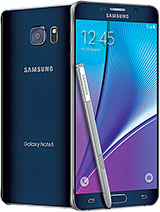
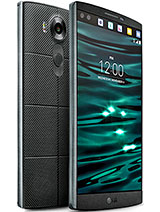
The speaker on Huawei Mate 8 unfortunately, scored a Below Average mark in terms of loudness. The Galaxy Note5 and the LG V10 are only slightly louder, but the Lumia 950 XL excels in this respect.
The Huawei Mate 8 however did marvelously in our audio output quality via the 3.5mm audio jack.
While connected to an active external amplifier, the smartphone's output was clean, while its loudness was well above average, making up for one of the best showings out there.
Even more impressively, plugging in a pair of headphones causes next to no distortion - even the hike in stereo crosstalk we've come to expect is very minor and the end result is excellent. None of the other readings are affected either and volume levels stay high for an impressive showing.
Audio score
3.5
Photo camera
The Huawei Mate 8 camera uses a 1/2.8" sensor with 16MP resolution made by Sony. There's optical image stabilization too and phase detection auto focus. A dual-tone LED flash can help out in the dark and will also produce more realistic flash photos.
The camera outputs noticeably soft images, which lack the detail and texture we've come to expect from high-end smartphones. There also was an awful lot of noise in all but the brightest portions of the images.
Colors are rendered on the conservative side - punchy is not what they are. In broad daylight, the Mate 8 exposes consistently accurately, without variations from shot to shot. Dynamic range is decent, with only a slight tendency to clip the highlights.
The front camera of the Mate 8 is an 8MP unit. There is enough detail, little noise, good dynamic range and pleasing colors. There is also a nice-looking background blurring.
Camera samples
Photo camera score
3.5
Video camera
The Huawei Mate 8 is capable of recording videos in up to 1080p resolution - in either 30 or 60 frames per second. Strangely, the Mate 8 misses on 2160p (4K) video recording, while most of the competition already offers that.
At least video recording makes use of the Optical Image Stabilization system and videos come out nice and steady even when handheld. The videos taken by the Galaxy Note5 , however, are better stabilized.
When it comes to video quality, however, there isn't much room for praise. Videos lack the detail you'd expect from that resolution and have limited dynamic range. At least, there isn't an annoying focus hunting and they are smooth and steady.
Video camera score
2.0
Software
The Huawei Mate 8 runs on Android 6.0 Marshmallow, skinned with Huawei's own EmotionUI, in its v.4.0 iteration. Skinned might be putting it mildly, though, as the interface has less in common with stock Android than it does with iOS.
There's plenty of stuff going on on the lockscreen, starting with the alternating cover images - every time you wake up the device, you're greeted by a different awesome looking wallpaper.
As is customary for Chinese-made Android UIs, beyond the lockscreen there is no app drawer like there would be on vanilla Android, or on other manufacturer's overlays.
Motion control also plays a significant role on the Huawei Mate 8. There are flip gestures, as well as picking up, tilting and even things like knuckle detection and drawing. All of those are extensively customizable to your liking as well.
The Mate 8 has a potentially handy, put in practice limited multi-window feature. Launched with a knuckle swipe (or a much more logical press-and-hold on the recent apps button), it lets you view two apps at once. You can resize the windows, and swap the two. The app selection is very limited, though, and is strikingly missing a browser.
Update, Mar 12: We've decreased the score in this section after the publishing of this review as we discovered a technical mistake has caused the initial calculation to be incorrect.
Update, Mar 12: We would like to make it clear that the score in this section is based on a number of factors such as how recent the version of Android is, how likely the phone is to get frequent updates to future major versions, how well the built-in biometric security feature works for unlocking the phone, as well as on the amount of meaningful extra features and customization options offered by the manufacturer on top of the vanilla Android. This comes to clarify that if you consider yourself to be an Android purist who likes their clean stock Android, the scores in this section most probably won't be completely relevant to your preferences.
Software score
4.5
Benchmark performance
The Huawei Mate 8 is powered by the Kirin 950 chipset, made by HiSilicon, a Huawei subsidiary. It's not the first in-house chip the company uses, it's been an ongoing Huawei effort to produce its own SoC's. Kirin chips have all traditionally had a common issue and that's been their graphics performance, but with the Mali-T880 GPU inside the Kirin 950, the Mate 8 has no issues on the graphics front.
Our benchmarks proved that the Mate 8 is one of the fastest smartphones on the market. It topped quite a few of our charts against phones such as the Galaxy Note5, the Nexus 6P, the iPhone 6s Plus and the V10.
Benchmark performance
5.0
Wrap-up
The Huawei Mate 8 may very well be the best 6-inch smartphone you can pick up today, but that's only if you are after a 6-inch smartphone specifically. The phone certainly makes a very compelling case for itself. It starts with the display, which boasts high contrast and exceptional sunlight legibility for an LCD panel. Battery life is nothing short of amazing either. Its processor packs all the punch you need and then a lot more.
Unfortunately, the image and video quality offered by the camera is only okay. Not everyone will love EmotionUI either regardless of the fact it offers class-leading app permissions control.
Huawei Mate 8
Pros
Cons
A 6-inch phablet that has the footprint of a 5.7-inch device and a fine metal build quality
Amazing battery life
Great, always-on fingerprint reader
DualSIM capabilities on a flagship phone
Class-leading fine grain control over the information and rights each mobile app gets
Amazing audio output quality
Camera and camcorder are less than stellar (and there is no 2160p 4K video recording)
The LG V10 has a slightly smaller LCD screen, a secondary status screen but a duo of front snappers and a superior main camera. Not to mention its increased sturdiness.
Great as it may be, Huawei's high-end phablet is not perfect, and you'd better be aware of its flaws, even if you choose to ignore them. The camera could use plenty of improvement, and the Android overlay is a love-it-or-hate-it affair. However, the Mate 8 is an exquisitely built smartphone with killer looks, superior battery life, and a powerful chipset. If only we could have it all.


 Le disjoncteur différentiel protège (aussi) une installation électrique contre les appareils défectueux qui pourraient provoquer des électrocutions. © Domaine public